Synonyms for Cold: 30+ Words for Chilly Weather
Quick Answer
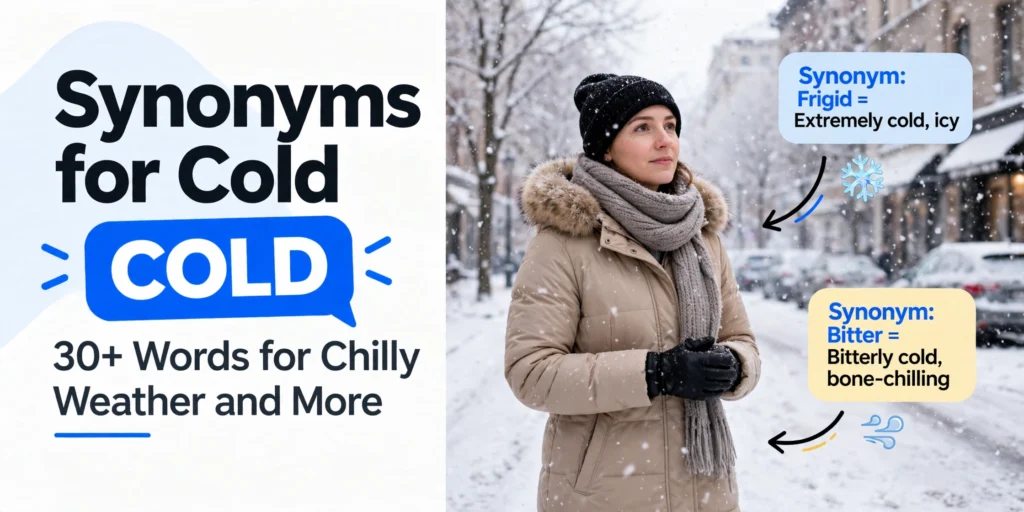
The best synonyms for cold include chilly, freezing, icy, frosty, frigid, brisk, wintry and cool for temperature, and distant, aloof, cold-hearted and unfriendly for a cold attitude. Chilly and cool describe mild cold, freezing and frigid describe extreme cold, and icy and frosty suggest ice or frost. The right choice depends on whether you mean the weather, an object, food, or a person’s manner.
Cold is one of those everyday words we use without thinking, yet it can mean several quite different things. We talk about cold weather, a cold drink, a cold room, a cold welcome and a cold person, and in each case the feeling is not quite the same. Reaching for a more precise synonym can make your writing clearer, more vivid and more natural, especially when cold on its own feels too vague or too plain.
The good news is that English has a rich set of words for coldness, from gentle words such as cool and chilly to dramatic words such as freezing, frigid and icy. Some describe temperature only, while others describe feeling, atmosphere or character. Knowing the difference matters, because a brisk morning is pleasant in a way that a bitter morning is not, and a cool reply is very different from a frosty one.
In this guide, you will find more than 30 synonyms for cold, grouped by meaning so you can choose the right one quickly. Each section explains when the word works best, how strong it is, and how it sounds in a real sentence. Whether you are describing winter weather, a drink straight from the fridge, or someone who seems distant and unwelcoming, there is a better word than cold waiting for you.
Synonyms for Cold Weather
When we talk about cold weather, we usually mean the air temperature, the wind and the general feeling of being outside. Some synonyms in this group are mild and even pleasant, while others suggest real discomfort. Chilly is a good everyday choice for weather that is cold enough to need a coat but not cold enough to be painful. For example: It was a chilly morning, so she put on a scarf before leaving the house.
Brisk is similar, but it often sounds more positive and energetic. A brisk walk on a clear winter day can feel refreshing, even if the air is cold. Wintry describes weather that feels like winter, with low temperatures, grey skies and perhaps snow or frost. Bitter and raw are stronger and less pleasant. Bitter cold cuts through clothing, while raw cold is often damp and windy as well as cold. Nippy is an informal British word for a sharp, sudden chill in the air.
- Chilly: cold enough to feel uncomfortable, but not extreme. Example: The evening turned chilly after sunset.
- Freezing: extremely cold, at or below freezing point. Example: It was freezing outside, and the puddles had turned to ice.
- Icy: very cold, like ice, often with ice on roads or paths. Example: The icy wind made her pull her coat tighter.
- Frosty: cold enough for frost to form. Example: We woke to a frosty morning and white rooftops.
- Frigid: extremely and unpleasantly cold. Example: The frigid air made it hard to stay outside for long.
- Brisk: cold but fresh and lively. Example: They enjoyed a brisk walk along the coast.
- Wintry: like winter, cold and often grey. Example: A wintry shower swept across the hills.
- Bitter: painfully cold, especially with wind. Example: A bitter wind blew in from the north.
- Raw: cold and damp, often with wind. Example: The raw weather kept most people indoors.
- Nippy: sharply cold in a brief, noticeable way. Example: It is a bit nippy this morning, so wear a jumper.
Freezing is the strongest common choice for weather, and it is often used loosely to mean very cold rather than literally below zero degrees. Frigid is more formal and more dramatic, so it suits descriptive writing better than casual conversation. Frosty is useful when you want to mention frost without saying the word cold twice, while icy works well when the cold is linked to frozen surfaces or a sharp wind.
Synonyms for the Cold Temperature of Things
Objects can be cold in a different way from weather. A cold floor, a cold metal railing or a cold bedroom does not involve wind or frost, so the best synonym often depends on touch rather than temperature alone. Cool is the mildest choice here. It suggests pleasantly or slightly cold, rather than uncomfortably cold. For example: The stone floor felt cool under her bare feet.
Chilly also works for rooms and objects, especially when the cold is unwelcome. A chilly room is one that needs heating, while a cold draught is a stream of cold air coming through a gap. Icy is a good choice when something feels as cold as ice, such as cold water or a metal surface in winter. For example: He washed his hands in icy water and dried them quickly.
Frozen is stronger and more literal. It means something has turned to ice or become stiff with cold. A frozen pipe, a frozen lock or frozen fingers all suggest a level of cold that stops things working normally. Stone-cold is an informal phrase for something completely cold, often after it should have been warm. For example: By the time he arrived, his tea had gone stone-cold.
When describing a house or room, draughty, unheated and cold to the touch can also help. A draughty room feels cold because air is coming in, while an unheated room is cold because there is no heating. Choosing a word that explains why something feels cold is often more useful than repeating cold itself.
Synonyms for Cold Food and Drink
Cold food and drink need their own words, because temperature is often part of the pleasure rather than a problem. Chilled is the most useful synonym here. It means food or drink that has been deliberately cooled, usually in a fridge. For example: She served chilled white wine with the meal.
Ice-cold is a stronger, more emphatic choice. It suggests something very cold, often with ice added or kept on ice. It works well for water, lemonade, beer and other drinks on a hot day. For example: After the long walk, a glass of ice-cold water was exactly what he needed.
Cool is also common for food and drink, especially when the cold is gentle rather than extreme. A cool drink is refreshing without being icy. Refreshing itself is not a direct synonym for cold, but it is often used to describe a cold drink that feels pleasant. Lukewarm, by contrast, is useful when something should be cold but is not quite cold enough. For example: The soup had gone lukewarm because it had been left out too long.
Other useful words include frosty, for a very cold glass or bottle, and refrigerated, for food kept cold in a fridge. A frosty bottle suggests condensation and a satisfying chill, while refrigerated is more formal and factual. For a dessert, frozen and iced can also apply. Frozen yoghurt is solid and icy, while iced coffee is coffee served cold over ice.
Synonyms for a Cold Personality or Attitude
The figurative sense of cold is quite different from temperature. A cold person is not literally low in temperature. They seem distant, unfriendly or unwilling to show warmth, interest or affection. This is where synonyms need the most care, because the wrong word can change the meaning completely.
Distant is a gentle, neutral choice. A distant person keeps other people at arm’s length, but they may not be unkind. For example: He seemed distant at the party and spoke to very few people. Aloof is similar but slightly stronger. It suggests someone who is deliberately separate and hard to approach. Reserved is softer still and can be positive. A reserved person is quiet and private, not necessarily cold.
Frosty is a vivid choice for a cold attitude, especially in a social situation. A frosty reception means a welcome that is polite on the surface but unwelcoming underneath. For example: She received a frosty reply to her friendly message. Cold-hearted describes a deeper lack of kindness or sympathy. It suggests someone who does not care about other people’s feelings. Unfriendly, unwelcoming and standoffish are plainer choices for the same idea, while icy can also describe a tone of voice or a stare.
- Distant: emotionally far away and hard to connect with. Example: His distant manner made it hard to know what he was thinking.
- Aloof: separate, proud and difficult to approach. Example: The new manager seemed aloof and rarely joined the team for lunch.
- Cold-hearted: lacking kindness or sympathy. Example: It was a cold-hearted decision to ignore their request for help.
- Frosty: unfriendly in a polite but chilly way. Example: They exchanged a frosty greeting and said nothing more.
- Unfriendly: not warm or welcoming. Example: The shop assistant gave an unfriendly shrug and walked away.
- Standoffish: keeping a distance from other people. Example: She can seem standoffish at first, but she is kind once you know her.
- Reserved: quiet and private, not openly warm. Example: He is reserved with strangers but relaxed with friends.
- Icy: very cold in tone or manner. Example: Her icy stare made the room fall silent.
Context matters here. Reserved can be a compliment, while cold-hearted is almost always a criticism. Frosty works well for a single moment, such as a greeting or a reply, while distant describes a longer pattern of behaviour. If you are unsure, choose a softer word such as distant or reserved rather than a harsher one such as cold-hearted.
Choosing the Right Synonym for Cold
The best synonym depends on three questions: how cold is it, what is cold, and what feeling do you want to create. For mild cold, use cool, chilly or brisk. For strong cold, use freezing, frigid or icy. For a cold atmosphere, use frosty or wintry. For a cold person, use distant, aloof or frosty, depending on how unfriendly they seem.
It also helps to think about formality. Nippy and stone-cold are informal and work well in conversation or light writing. Frigid, aloof and standoffish are more formal and suit essays, stories and careful descriptions. Chilly, freezing, icy and frosty work in almost any style, which is why they are so useful.
Finally, avoid using a strong word when a mild one will do. Saying it was freezing when it was only chilly can sound exaggerated, while saying someone was cold-hearted when they were only reserved can sound unfair. A precise synonym is not just a fancier word. It is a word that matches the temperature, the object and the tone you mean. If you enjoy exploring word choices like this, you may also like our guide to synonyms for different, which shows how small changes in wording can change the meaning of a sentence.
Common Mistakes
Cold is easy to use, but its synonyms are easy to misuse. The most common mistake is using a temperature word for a person, or a personality word for the weather. The pairs below show the problem and a better choice.
- Wrong: She gave me a freezing welcome. Right: She gave me a frosty welcome.
- Wrong: The water was cold-hearted. Right: The water was ice-cold.
- Wrong: It was a chilly decision to close the library. Right: It was a cold-hearted decision to close the library.
- Wrong: He is a frosty person who loves winter walks. Right: He is a reserved person who loves winter walks.
- Wrong: The room was frigid because the heating was off for an hour. Right: The room was chilly because the heating was off for an hour.
Another common mistake is using freezing for anything that is simply cool. Freezing suggests extreme cold, so it sounds wrong for a mildly cold drink or a slightly cool evening. Chilly or cool is usually more honest. In the same way, icy should be kept for things that feel like ice or are covered in ice. A cold stare can be icy, but a cold room is not usually icy unless ice has formed.
Learners also sometimes confuse cool with cold in a negative sense. Cool can mean slightly cold, but it can also mean calm, fashionable or impressive. The meaning is usually clear from context, but if you mean low temperature, chilly or cold is safer. For more help with words that change meaning in context, see our guide to synonyms for bad, which explains how tone affects word choice.
Frequently Asked Questions
What is the best synonym for cold weather?
Chilly is the best general synonym for cold weather, because it is clear, natural and suitable for most situations. Freezing is better for very cold weather, frosty is better when frost is present, and brisk is better when the cold feels fresh and pleasant. Choose the word that matches how cold it feels, not just the temperature.
What is a synonym for cold that means unfriendly?
Distant, aloof, frosty, unfriendly and cold-hearted are all synonyms for a cold attitude, but they are not identical. Distant and aloof suggest emotional distance, frosty suggests a cold welcome or reply, and cold-hearted suggests a lack of kindness. Reserved is a softer choice when someone is quiet rather than unkind.
Is chilly the same as freezing?
No. Chilly means cold enough to notice and perhaps feel uncomfortable, while freezing means extremely cold, often at or below freezing point. A chilly evening might call for a jumper, while a freezing night might call for a thick coat, gloves and a hat. Freezing is much stronger than chilly.
What is the opposite of cold?
The most common opposites are warm and hot, depending on the sense. Warm is the opposite for mild cold, such as a warm room or a warm welcome. Hot is the opposite for strong cold, such as hot water or hot weather. For a cold personality, the opposites are warm, friendly, welcoming and kind. If you want more positive alternatives, our guide to synonyms for great is a useful place to continue.
With the right synonym, cold becomes much more precise. Use chilly for a mild chill, freezing for extreme cold, frosty for a cold welcome, and chilled for food and drink, and your writing will sound clearer and more natural.


Join the conversation