Synonyms for Angry: 30+ Words to Express Anger Better
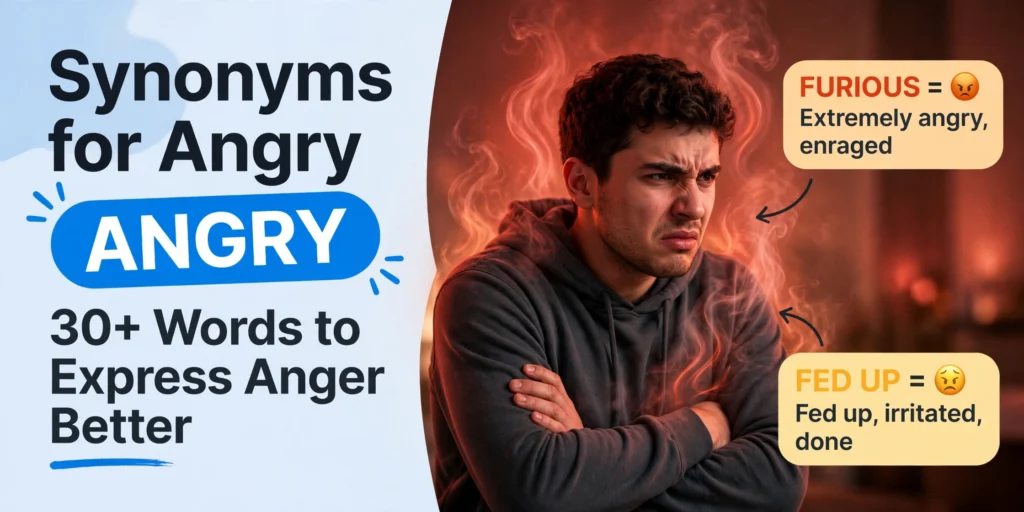
“Angry” is a useful word, but it is also a very blunt one. It tells the reader that someone is unhappy, yet it says almost nothing about how strong that feeling is, what caused it, or how the person is behaving. A person who is mildly annoyed by a delayed train is not feeling the same emotion as a person who is furious after being treated unfairly, so using the same word for both weakens your writing.
Learning synonyms for angry gives you more control. You can show a small irritation, a firm protest, or a loss of temper without having to explain the feeling in a separate sentence. The right word can also change the tone of a sentence: “cross” sounds everyday and British, “indignant” sounds formal and principled, and “livid” sounds intense and immediate.
In this guide, you will find more than 30 synonyms for angry, grouped by intensity. Each group includes clear meanings, British usage notes, and example sentences, so you can choose the word that fits the situation rather than simply reaching for the strongest one.
Quick Answer
The best synonyms for angry are annoyed, irritated, cross, frustrated, exasperated, furious, livid, enraged, incensed, infuriated, and outraged. Use annoyed or cross for mild anger, angry or indignant for a stronger but controlled reaction, and furious, livid, or enraged for intense anger. In British English, cross is a natural everyday choice, while mad is more often used to mean crazy than angry.
Mildly Annoyed: Synonyms for a Small Irritation
These words describe anger at its lowest level. The person is unhappy, impatient, or put out, but they are still in control. They are useful when the cause is minor, such as a small delay, a careless mistake, or a repeated annoyance.
- Annoyed: slightly angry because something is irritating. Example: She was annoyed when the bus left without her.
- Irritated: bothered or impatient, often by something repeated. Example: He felt irritated by the constant noise from the next room.
- Cross: a common British word for mildly angry or displeased. Example: Mum was cross when we left our shoes in the hall.
- Peeved: informally annoyed, often by something small or petty. Example: He was peeved that nobody had replied to his email.
- Vexed: annoyed or worried, often in a slightly formal or old-fashioned way. Example: She was vexed by the repeated delays.
- Displeased: not happy with something, often used in formal or polite language. Example: The manager was displeased with the poor service.
- Grumpy: bad-tempered in a mild, often temporary way. Example: He was grumpy after a poor night’s sleep.
- Put out: informally annoyed or inconvenienced. Example: She was put out by the sudden change of plan.
- Exasperated: annoyed because something keeps going wrong. Example: The teacher was exasperated by the same mistake again and again.
- Frustrated: upset because you cannot achieve something, rather than angry at a person. Example: She felt frustrated by the slow internet connection.
Notice that frustrated is not an exact synonym for angry. It describes the feeling of being blocked or unable to make progress, and it often leads to anger rather than being anger itself. If you want to describe a low-level emotional state, learning these words is just as useful as learning synonyms for sad, where small differences in meaning also matter.
Angry: Synonyms for a Clear and Strong Reaction
These words describe a definite feeling of anger. The person is no longer just irritated; they feel that something is wrong, unfair, or unacceptable. Many of these words are suitable for essays, reports, stories, and everyday writing.
- Angry: the general word for feeling strong displeasure. Example: He was angry when he discovered the mistake.
- Mad: mainly American for angry; in British English, it more often means crazy. Example: She was mad at him for forgetting her birthday.
- Indignant: angry because you believe something is unfair or wrong. Example: She was indignant at the unfair treatment of her colleague.
- Resentful: angry because you feel you have been treated unfairly over time. Example: He felt resentful after years of being overlooked for promotion.
- Outraged: very angry and shocked by something wrong or offensive. Example: Customers were outraged by the sudden price increase.
- Incensed: extremely angry, often used in formal writing. Example: The local residents were incensed by the decision to close the library.
- Infuriated: made very angry, often by someone’s behaviour. Example: She was infuriated by his rude reply.
- Seething: angry but trying not to show it openly. Example: He sat in silence, seething with anger.
- Heated: angry and emotional during an argument. Example: The discussion became heated when they disagreed about the budget.
- Wrathful: a literary or formal word for full of anger. Example: The wrathful king ordered the messenger to leave at once.
Indignant and resentful are especially useful because they explain the reason for the anger. Indignant suggests a sense of injustice, while resentful suggests anger that has built up over time. Outraged adds shock as well as anger, so it is stronger than simply saying someone was angry. As with synonyms for bad, the best choice depends on the exact shade of meaning you want to convey.
Furious: Synonyms for Intense Anger
These words describe anger at its highest level. The person may be shouting, shaking, or struggling to stay calm. Use them sparingly: if every character is furious, the word loses its force. Save them for moments when the anger is serious, sudden, or difficult to control.
- Furious: extremely angry, often visibly upset. Example: She was furious when she found out she had been lied to.
- Livid: so angry that you are pale or shaking, often used informally. Example: He was livid after waiting two hours for a reply.
- Enraged: filled with violent anger. Example: The crowd was enraged by the referee’s decision.
- Raging: very angry and out of control. Example: He stormed out of the room in a raging temper.
- Fuming: silently very angry, often after an argument. Example: She was still fuming about the meeting the next morning.
- Apoplectic: so angry that you can hardly speak, often used for comic or dramatic effect. Example: He was apoplectic when he saw the damage to his car.
- Beside oneself: so angry or upset that you cannot behave normally. Example: She was beside herself with rage.
- Incandescent with rage: a vivid, literary way of saying extremely angry. Example: He was incandescent with rage after the insult.
Livid and fuming are common in everyday British English, while apoplectic and incandescent with rage are more dramatic and better suited to fiction or expressive writing. Enraged is strong and direct, so it works well in news reports and formal descriptions, but it can sound too extreme for a minor disagreement.
How to Choose the Right Synonym for Angry
The best synonym depends on three things: how strong the feeling is, why the person is angry, and how formal the writing is. A word that is perfect in a novel may sound too dramatic in a work email, while a formal word may sound stiff in a casual conversation.
- For mild anger, choose annoyed, irritated, cross, or peeved.
- For anger caused by unfairness, choose indignant, resentful, or outraged.
- For intense anger, choose furious, livid, enraged, or fuming.
- For formal writing, choose displeased, incensed, infuriated, or indignant.
- For informal British writing, choose cross, livid, fuming, or put out.
Also think about who is feeling the anger and how they show it. Seething and fuming suggest anger held inside, while raging and furious suggest anger shown openly. A person who is exasperated is usually tired of a repeated problem, while a person who is resentful has been carrying the feeling for a long time. Choosing a precise word can make your writing clearer and more interesting, just as choosing the right word matters when you explore synonyms for big instead of repeating the same adjective.
Common Mistakes
Many mistakes with synonyms for angry come from using a word that is too strong, too formal, or slightly different in meaning. Check the pairs below before you choose.
- Wrong: She was furious because the train was two minutes late. Right: She was annoyed because the train was two minutes late.
- Wrong: He was mad in the sense of being insane, used to mean angry in formal British writing. Right: He was angry about the decision, not pleased with it at all.
- Wrong: She was frustrated with him for lying to her. Right: She was angry with him for lying to her, and frustrated by the lack of trust.
- Wrong: He was outraged by the spelling mistake. Right: He was irritated by the spelling mistake.
- Wrong: She was apoplectic about the cold coffee. Right: She was put out about the cold coffee.
Frequently Asked Questions
What is the best synonym for angry?
There is no single best synonym, because it depends on the strength of the feeling. Annoyed and cross are best for mild anger, indignant and outraged are best for anger caused by unfairness, and furious and livid are best for intense anger.
What is a formal synonym for angry?
Good formal synonyms are displeased, incensed, infuriated, indignant, and enraged. Displeased is the mildest and most polite, while incensed and enraged are much stronger and more dramatic.
What is the difference between angry and furious?
Angry is the general word for strong displeasure, while furious means extremely angry. A person who is furious is likely to show it more clearly, through raised voices, sudden movement, or a loss of control.
Is “cross” a British word for angry?
Yes. Cross is a common British English word for mildly angry or displeased, especially in everyday speech. It sounds natural in sentences such as “Dad was cross with me for being late,” and it is softer than angry or furious.
Once you can tell the difference between annoyed, angry, and furious, your writing becomes more precise and more expressive. Keep practising with real examples, and explore more word guides on grammarfix.co.uk to build your vocabulary one useful group at a time.


Join the conversation