Synonyms for Calm: 25+ Words for Peaceful Moments
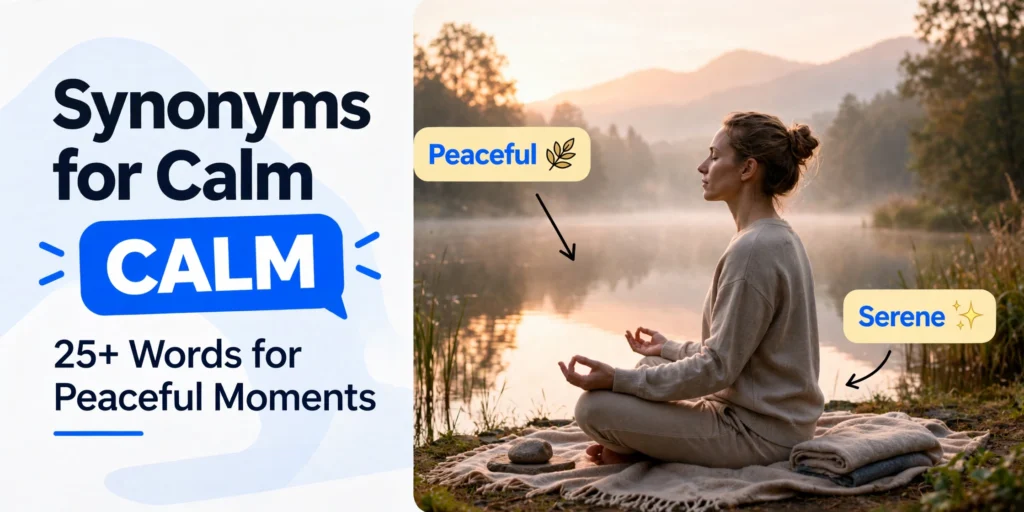
Calm is one of those words we reach for again and again, whether we are describing a quiet morning, a person who stays steady under pressure, or a sea that has finally stopped churning. It is a useful word, but it is also a broad one. It can mean peaceful, relaxed, controlled, still, or untroubled, and those meanings are not quite the same. Choosing a more precise synonym can make your writing clearer, more vivid, and more natural.
The trouble is that many words for calm sound similar but behave differently. Serene feels gentle and almost poetic, while composed suggests self-control in a difficult moment. Laid-back is warm and informal, whereas placid is formal and often used for water, animals, or a person’s temperament. If you use the wrong one, your sentence can sound stiff, vague, or simply out of place.
In this guide, you will find more than 25 synonyms for calm, grouped by meaning, with example sentences and practical advice on when to use each one. Whether you are writing an essay, a story, a work email, or a message to a friend, you will find a word that fits the mood you want to create.
Quick Answer
The best synonyms for calm include peaceful, serene, tranquil, composed, relaxed, placid, unruffled, and laid-back. Use peaceful or serene for a quiet, gentle atmosphere, composed or unruffled for someone who stays in control under pressure, and relaxed or laid-back for an informal, easy-going mood.
What Does Calm Really Mean?
At its simplest, calm means not excited, worried, angry, or disturbed. It can describe a person, a place, a feeling, or a situation. A calm person is not upset. A calm sea has no large waves. A calm discussion is one without shouting or tension.
Yet the word covers several related ideas. Sometimes it means peaceful, as in a quiet village on a Sunday morning. Sometimes it means in control, as in a doctor who stays calm during an emergency. Sometimes it means relaxed, as in someone lying in the garden after a long week. And sometimes it means still, as in a lake with no wind.
Because of this range, the best synonym depends on what you want to emphasise. Are you describing the atmosphere, the person’s emotions, or their behaviour? Once you know that, the right word becomes much easier to choose.
Synonyms for a Peaceful Atmosphere
These words are ideal for places, mornings, evenings, landscapes, and moods. They suggest quiet, gentleness, and freedom from disturbance.
- Peaceful — quiet and free from disturbance. We spent a peaceful afternoon in the garden, reading and drinking tea.
- Serene — calm, peaceful, and untroubled, often with a beautiful or graceful quality. The serene lake reflected the mountains perfectly.
- Tranquil — quiet and peaceful, often used in formal or literary writing. She found a tranquil spot by the river to sit and think.
- Still — without movement or sound. The house was still after everyone had gone to bed.
- Quiet — making little or no noise. It was a quiet evening, with only the sound of rain on the roof.
- Restful — giving a feeling of calm and relaxation. The cottage was a restful place to stay after a busy month.
- Soothing — having a calming effect. She put on some soothing music while she cooked dinner.
- Idyllic — peaceful, happy, and perfect in a simple way. They enjoyed an idyllic weekend in the countryside.
Peaceful is the safest all-round choice. Serene and tranquil are more formal and work well in descriptive writing, while still and quiet are plainer and more direct. If you are writing about a place that feels almost perfect, idyllic adds warmth as well as calm.
Synonyms for Staying in Control
These words describe people who do not panic, lose their temper, or become upset, even when things go wrong. They are useful for work, exams, sport, and everyday stressful situations.
- Composed — calm and in control of your feelings. Despite the bad news, she remained composed throughout the meeting.
- Collected — calm and able to think clearly in a difficult situation. He stayed collected and explained the problem step by step.
- Unruffled — not upset or worried, even when something unexpected happens. The teacher remained unruffled as the fire alarm went off.
- Level-headed — sensible and calm in difficult situations. We need a level-headed person to lead the team.
- Poised — calm, confident, and in control. She gave a poised answer, even though the question was difficult.
- Self-possessed — calm and confident, with control over your feelings. He was remarkably self-possessed for someone so young.
- Unflappable — calm in a crisis; not easily upset. Our manager is unflappable, even when deadlines change at the last minute.
- Steady — calm and reliable, without sudden changes. He spoke in a steady voice and reassured everyone in the room.
Composed and collected are excellent choices for formal writing. Unruffled and unflappable are more vivid and slightly informal, so they work well in stories and everyday writing. Level-headed is particularly useful when you want to suggest good judgement as well as calmness. For a similar guide to positive character words, see our list of synonyms for kind.
Synonyms for Relaxed and Easy-Going
These words describe a comfortable, unhurried feeling. They are often used for people, holidays, weekends, and informal situations.
- Relaxed — free from worry or tension. After a long bath, I felt completely relaxed.
- Laid-back — relaxed and not worried about things; informal. He is a laid-back teacher who never rushes his students.
- Easy-going — relaxed and not easily upset or annoyed. She has an easy-going nature and gets on with everyone.
- Carefree — free from worries or responsibilities. They spent a carefree summer travelling around Europe.
- At ease — relaxed and comfortable. After a few minutes, she began to feel at ease with her new colleagues.
- Untroubled — not worried or disturbed. He slept soundly, untroubled by the storm outside.
- Content — happy and satisfied with your life. She felt content sitting by the fire with a good book.
- Mellow — relaxed and pleasant, often after a good experience. The warm evening left us all feeling mellow and happy.
Relaxed is the most neutral and widely used of these words. Laid-back and easy-going are informal and best suited to speech, friendly writing, or descriptions of personality. Carefree suggests a lack of worries rather than simply a relaxed mood, so use it when freedom from responsibility is part of the meaning.
Synonyms for Placid, Gentle, and Undisturbed
These words often describe temperament, water, weather, or a slow and steady character. Some are formal, so they suit literary or descriptive writing.
- Placid — calm and peaceful, with little movement or activity. The placid river moved slowly through the valley.
- Halcyon — peaceful and happy, often used for a period of time in the past. She remembered the halcyon days of her childhood summers.
- Equable — calm and even-tempered; not easily upset. He has an equable temperament and rarely loses his patience.
- Imperturbable — calm and not easily upset, even in difficult situations. Her imperturbable manner impressed everyone in the interview.
- Unperturbed — not worried or upset. He seemed unperturbed by the delay and simply waited quietly.
- Sedate — calm, slow, and dignified. The village has a sedate pace of life that suits older residents.
- Unagitated — not disturbed or excited. The surface of the pond remained unagitated in the morning light.
- Pacific — peaceful and calm, often used in formal or literary contexts. A pacific smile spread across her face.
Placid works beautifully for water, animals, and gentle people, but it can sound odd if you use it for a busy office or a lively party. Halcyon is best kept for nostalgic or poetic writing. Equable, imperturbable, and unperturbed are formal words, so they fit essays and serious writing better than casual conversation.
How to Choose the Right Synonym for Calm
Start by asking what kind of calm you mean. If you are describing a place, choose a word like peaceful, serene, or tranquil. If you are describing a person under pressure, composed, unruffled, or level-headed will be more accurate. If you are describing a relaxed mood, relaxed, laid-back, or easy-going will sound more natural.
Next, think about the register. Formal writing suits tranquil, composed, placid, and unperturbed. Informal writing suits laid-back, mellow, easy-going, and at ease. A word that is too formal can make a friendly text sound stiff, while a word that is too casual can weaken a serious essay.
Finally, check the grammar. Most of these words are adjectives, so they can go before a noun — a serene morning, a composed reply, a relaxed afternoon — or after a linking verb such as be, feel, seem, or remain. A few, such as at ease, work only after a verb: you can say she felt at ease, but not an at ease woman. If you are looking for more positive descriptive words, our guide to synonyms for great follows the same approach.
Common Mistakes
Wrong: He gave a laid-back presentation to the board of directors.
Right: He gave a composed presentation to the board of directors.
Laid-back is too informal for a serious business setting; composed suggests control and professionalism.
Wrong: The placid teacher shouted at the noisy class.
Right: The usually placid teacher finally lost her temper with the noisy class.
Placid means calm and gentle, so it contradicts shouting unless you show a change.
Wrong: She felt serene after running a marathon.
Right: She felt exhausted but proud after running a marathon.
Serene suggests quiet peace, not physical tiredness. For words that describe tiredness accurately, see our list of synonyms for tired.
Wrong: The calm storm damaged several houses.
Right: The violent storm damaged several houses.
A storm cannot be calm and damaging at the same time; choose a word that matches the action.
Wrong: He remained unruffled and panicked during the exam.
Right: He remained unruffled during the exam.
Unruffled and panicked are opposites, so they cannot describe the same person at the same moment.
Frequently Asked Questions
What is the best synonym for calm?
There is no single best synonym, because it depends on the context. Peaceful is the best general replacement, composed is best for self-control under pressure, serene is best for a beautiful, quiet atmosphere, and relaxed is best for an informal, comfortable mood.
What is the difference between calm, peaceful, and serene?
Calm is the broadest word and can describe people, places, and feelings. Peaceful emphasises freedom from disturbance or conflict. Serene is more formal and poetic, suggesting a deep, graceful, and almost perfect peace, often in nature or in a person’s expression.
Is laid-back a good synonym for calm?
Yes, in informal contexts. Laid-back describes someone who is relaxed and not easily worried, which is close to calm. However, it is too casual for formal writing, exams, or professional emails, where composed, relaxed, or easy-going may be better choices.
Can calm describe a person and a place?
Yes. A calm person is not upset or excited, while a calm place is quiet and peaceful. The meaning changes slightly with the subject, so choose your synonym carefully. For a person, try composed or level-headed; for a place, try peaceful, tranquil, or still.
For more word-choice guides, you may also enjoy our lists of synonyms for sad and synonyms for interesting.

Join the conversation