Other Ways to Say Trick or Treat
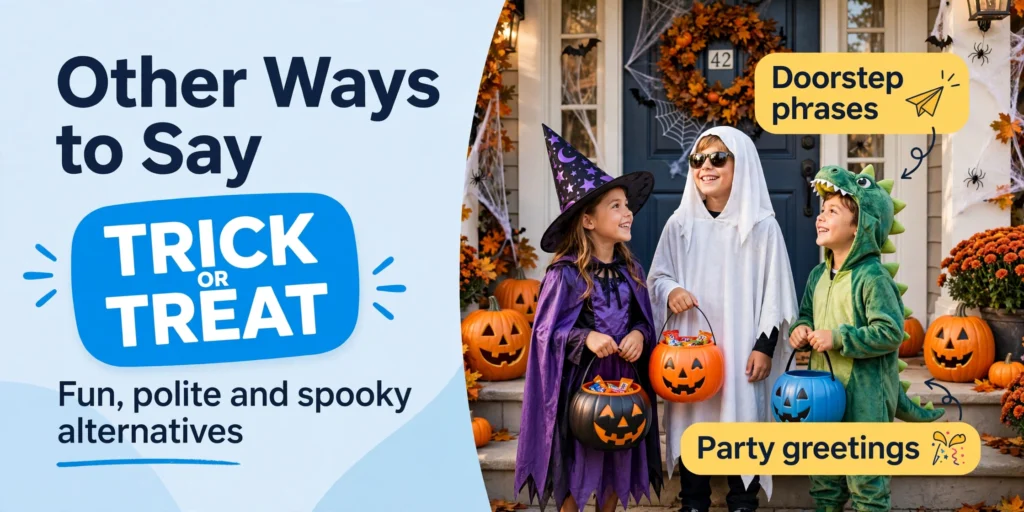
On Halloween night, “trick or treat” is the phrase most children call out when they knock on a door in costume. It is short, familiar, and instantly understood, which is exactly why it has lasted so long. Yet it is not the only thing you can say: depending on the setting and how formal or playful you want to be, a different phrase may fit better.
You do not need to change the meaning to change the words. Most alternatives keep the same friendly bargain at the heart of the tradition: a small treat in exchange for a visit, a smile, and no tricks. Some are shorter, some rhyme, and some work better in a text message or on a party invitation.
This guide looks at practical alternatives, explains when each one works best, and shows how to use them naturally — from quick doorstep options to party greetings.
Quick Answer
Instead of “trick or treat”, you can say “Happy Halloween!”, “Trick or treat, give me something sweet to eat”, or simply “Happy Halloween — trick or treat!” For a shorter option, “Treats, please!” also works well. The best choice depends on the setting: use a short greeting at the door, a rhyme for fun with children, and a warmer message for parties and invitations.
What “Trick or Treat” Actually Means
The phrase presents a playful choice. The “treat” is usually sweets, chocolate, or a small gift given to the visitor. The “trick” is not a real threat; it is part of the joke, a pretend consequence if no treat is offered. In modern celebrations, the trick is almost never carried out, and the exchange is meant to be light-hearted.
Understanding that meaning helps you choose a good alternative. A strong replacement keeps the tone friendly and makes it clear that you are taking part in Halloween, not making a demand. That is why “Happy Halloween!” works so well, even though it drops the bargain itself. If you want to keep the bargain, choose a phrase that still mentions treats or sweets.
Context also matters. A phrase that sounds charming from a small child in costume may sound odd from an adult at a work party, and a formal invitation line would sound out of place shouted at a front door. The alternatives below are therefore grouped by situation.
Short Alternatives You Can Say at the Door
If you want something quick and easy, a short alternative is often best. Children can remember it, neighbours can understand it at once, and it keeps the queue moving on a busy Halloween evening.
- “Happy Halloween!” — The simplest and most versatile alternative. It works for children and adults, at the door and in passing. Example: “Happy Halloween! Thank you for the sweets.”
- “Treats, please!” — Short, polite, and clear. It keeps the focus on the treat without the trick. Example: A child in costume says, “Treats, please!” and holds out a bucket.
- “Something sweet, please!” — A gentle variation that works well for younger children. Example: “Something sweet, please! Happy Halloween!”
- “Happy Halloween — trick or treat!” — A blend of both phrases. It sounds warmer than “trick or treat” alone, while still using the familiar words. Example: “Happy Halloween — trick or treat! We love your decorations.”
- “Trick or treat, please!” — Adding “please” softens the original phrase without changing it much. Example: “Trick or treat, please! Thank you very much.”
Short phrases are also useful when a child feels shy: a two-word greeting is easier to say than a rhyme. If you are visiting neighbours you know well, add a thank-you or a compliment about their decorations, just as you would when finding other ways to say have a good day for everyday greetings.
Playful Rhymes and Longer Versions
Rhymes are part of the fun of Halloween, especially for children who enjoy chanting together. These longer versions keep the traditional wording but add rhythm and humour. They are best used when there is time to say them properly, rather than in a long queue.
- “Trick or treat, smell my feet, give me something good to eat!” — The best-known extended rhyme. It is playful and silly, and children often say it together. Example: A group of children chants, “Trick or treat, smell my feet, give me something good to eat!” before laughing and holding out their buckets.
- “Trick or treat, give me something sweet to eat!” — A shorter rhyme that keeps the treat clearly in view. Example: “Trick or treat, give me something sweet to eat, please!”
Keep the delivery light: the aim is to entertain, not to pressure the householder. A smile, a thank-you, and a quick move on keep the evening enjoyable for everyone.
Alternatives for Parties, Invitations and Messages
Not every Halloween phrase is spoken at a front door. You may need a greeting for a party, a line for an invitation, or a message to friends — and in those cases a greeting or wish usually fits better than a doorstep chant.
- “Happy Halloween!” — Still the safest choice for cards, texts, and invitations. Example: “Happy Halloween! Hope you have a spooky and sweet evening.”
- “Have a spooky Halloween!” — A warm wish with a Halloween twist. Example: “Have a spooky Halloween — and save me some sweets!”
- “Wishing you a happy and haunted Halloween!” — A slightly longer message that works well in a card. Example: “Wishing you a happy and haunted Halloween full of treats, not tricks.”
- “Join us for tricks, treats, and a spooky night!” — A good invitation line. It promises fun without sounding like a demand. Example: “Join us for tricks, treats, and a spooky night on 31 October — costumes encouraged!”
- “Trick or treat yourself!” — A playful twist for adults, often used on invitations or social media posts. Example: “Trick or treat yourself this Halloween — you deserve the good chocolate.”
For messages, a short, warm greeting usually reads better than a long rhyme. The same principle applies elsewhere: learning different ways to say bye shows how a small wording change can suit a formal message or a friendly text.
What to Say If You Do Not Want to Say “Trick or Treat”
Some people prefer not to use the phrase at all — because they are adults, because they are greeting friends rather than collecting sweets, or simply because they want a change. In those cases, a general greeting is best: “Happy Halloween”, “Have a great Halloween”, or “Enjoy your Halloween evening”. These still mark the occasion, but work as ordinary greetings, including when you are not in costume or speaking to someone who is not giving out sweets.
If you are hosting, welcome guests with phrases such as “Welcome to our haunted house!” or “Come in — the treats are inside!” These keep the Halloween theme while shifting the focus from the doorstep bargain to hospitality. Match the phrase to your role: visitor, host, or well-wisher.
Common Mistakes
Wrong: “Trick or treating!” as a greeting at the door.
Right: “Trick or treat!” — “Trick or treating” describes the activity, not the call made at the door. Say, “We are going trick or treating tonight.”
Wrong: “Trick and treat!”
Right: “Trick or treat!” — The phrase uses “or” because it presents a playful choice between a trick and a treat.
Wrong: “Give me sweets or else!”
Right: “Trick or treat, please!” — A demand sounds rude and loses the joke. Keep the request polite and playful.
Wrong: “Happy Halloween trick or treat smell my feet give me something good to eat thank you goodbye” all run together.
Right: “Trick or treat, smell my feet, give me something good to eat! Thank you! Happy Halloween!” — Pause between phrases so each one can be understood.
Wrong: Using a doorstep chant in a formal invitation.
Right: “You are invited to our Halloween party — tricks, treats, and spooky fun!” — Save chants for the doorstep and use a greeting or invitation line for formal messages.
Frequently Asked Questions
What is the simplest alternative to “trick or treat”?
“Happy Halloween!” is the simplest alternative. It is polite, widely understood, and works at the door, at a party, and in a message. If you want to keep the idea of treats, “Treats, please!” is another short and friendly option.
Can adults say “trick or treat”?
Yes, especially at parties or when accompanying children. At a neighbour’s door, however, many adults prefer “Happy Halloween!” because it sounds warmer and less like a demand for sweets.
What should children say after receiving sweets?
A simple “Thank you! Happy Halloween!” is ideal. It closes the visit politely and leaves a good impression, whatever phrase was used at the start. Teaching children to say thank you matters more than teaching them a clever rhyme.
Are rhymes like “smell my feet” still appropriate?
Yes, when used playfully among children and willing neighbours. The rhyme is a traditional joke, not a real insult, and it is best delivered with a smile. If you are unsure how it will be received, a shorter phrase such as “Happy Halloween!” is always a safe choice.
For more ideas on varying your greetings throughout the year, explore cool ways to say happy birthday — the same trick of matching the phrase to the occasion works just as well at Halloween as it does at a birthday.

Join the conversation