40 Other Ways to Say Good Luck (With Examples)
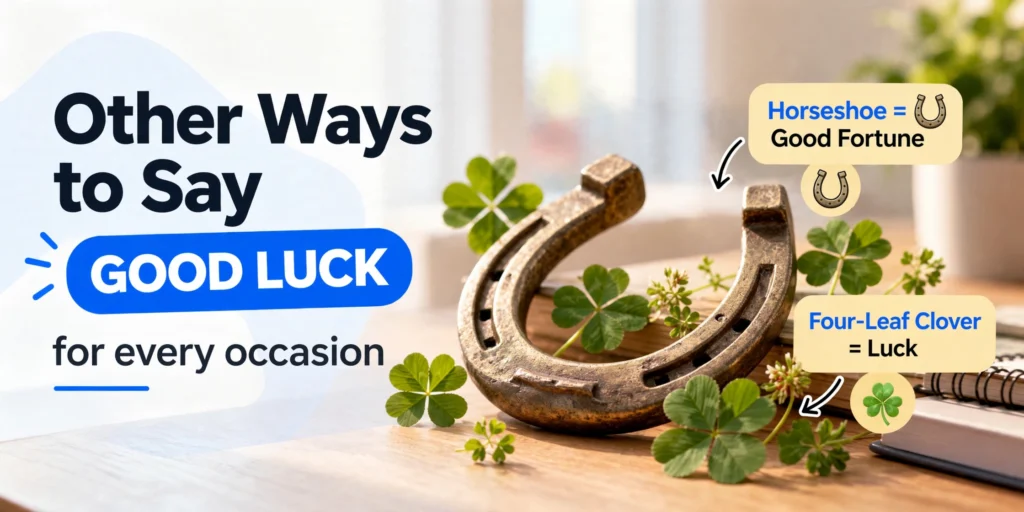
Finding yourself saying “good luck” to everyone, from your best friend before an exam to a colleague before a big presentation, can start to feel repetitive. While there is nothing wrong with the phrase itself, there are many more expressive ways to wish someone well, and the right alternative often lands far more powerfully than a generic “good luck”.
The phrase you choose also carries subtle meaning. “Good luck” quietly implies that the outcome depends on chance, which is why telling a job candidate “good luck” can feel slightly off — it suggests they need fortune on their side rather than skill. Alternatives like “you’ve got this” express confidence in the person, while “all the best” keeps things warm and professional. Choosing the right wording for the situation shows thoughtfulness, which is exactly what a well-wish should do.
In this guide, you will find more than forty alternatives to “good luck”, grouped by context: formal and professional settings, casual conversations, exams and interviews, performances and sports, and sensitive or difficult situations. Each section includes example sentences so you can see exactly how each phrase works in practice.
Quick Answer
Some of the best alternatives to “good luck” include “all the best”, “wish you the best”, “you’ve got this”, “fingers crossed”, “best of luck”, “break a leg” (for performers), “knock ’em dead” (informal, for performances or presentations), and “do your best”. For formal or professional contexts, “all the best” or “I wish you every success” are the safest choices, while “you’ve got this” and “fingers crossed” suit casual conversations with friends.
Formal and Professional Alternatives
In professional settings, your well-wish should sound polished and confident. Avoid phrases that imply the person depends on luck — this is particularly important before job interviews, where suggesting someone “needs luck” can unintentionally sound like a comment on their ability. Instead, express confidence in their preparation and professionalism.
- All the best. The safest all-round formal alternative. “All the best with the merger negotiations tomorrow.”
- I wish you every success. Warm but properly formal, ideal for emails. “I wish you every success in your new role.”
- Best of luck with everything. Slightly softer than “all the best”. “Best of luck with everything at the new branch.”
- I hope it goes well. Understated and professional. “I hope the client meeting goes well this afternoon.”
- I have every confidence in you. Expresses faith rather than luck. “I have every confidence in you ahead of the board presentation.”
- Wishing you a successful outcome. Works well in formal correspondence. “Wishing you a successful outcome in the funding round.”
- May your hard work pay off. Acknowledges effort, not chance. “May your hard work pay off in tomorrow’s appraisal.”
- I’m sure you’ll do brilliantly. Confident without being too casual. “I’m sure you’ll do brilliantly in the interview.”
Notice that none of these phrases actually use the word “luck”. That is the key principle for professional contexts: wish people success, not luck. If you are writing a thank-you message to an interviewer or a supportive note to a colleague, pairing your well-wish with genuine gratitude makes it even stronger — for inspiration, see our guide to creative ways to say thank you.
Casual and Friendly Alternatives
With friends and family, you can relax the tone completely. Casual alternatives to “good luck” tend to be shorter, warmer, and often more enthusiastic than the original phrase. These work in texts, voice notes, and everyday conversation.
- You’ve got this. Perhaps the most encouraging alternative of all — it says you believe in them. “You’ve got this, just breathe and answer one question at a time.”
- Fingers crossed. The classic casual wish. “Fingers crossed for your driving test on Friday!”
- Best of luck. A friendlier, slightly lighter version of “good luck”. “Best of luck tonight — you’re going to smash it.”
- Wish you the best. Warm and versatile. “Wish you the best on moving day!”
- Do your best. Takes the pressure off the outcome. “Just do your best and don’t worry about the score.”
- Go get ’em. Energetic and encouraging. “Go get ’em — the audition panel will love you.”
- Rooting for you. Shows you are personally invested. “I’m rooting for you in the final!”
- Sending good vibes your way. Playful and affectionate. “Sending good vibes your way before the big day.”
- Knock their socks off. A softer cousin of “knock ’em dead”. “Knock their socks off at the talent show.”
- Hope it all works out. Gentle and low-pressure. “Hope it all works out with the landlord.”
“You’ve got this” deserves a special mention because it reframes the entire situation. Where “good luck” hands the outcome over to chance, “you’ve got this” reminds the person that they already have what they need. Use it whenever someone seems nervous but well prepared — a friend before an exam, a sibling before a driving test, a colleague before a presentation.
For Exams, Tests and Interviews
Exams and interviews are high-pressure situations where the right words genuinely matter. People preparing for these moments want to feel that their effort counts, so phrases that acknowledge preparation work best. Avoid anything that treats the event as a lottery.
- Trust your preparation. Perfect for exams. “Trust your preparation — you revised for weeks and you know this material.”
- Show them what you can do. Great before interviews. “Show them what you can do; they’re lucky to have you as a candidate.”
- Stay calm and take your time. Practical and soothing. “Stay calm and take your time in the exam hall.”
- You’ve prepared well — now just let it flow. Acknowledges the work already done. “You’ve prepared well, now just let it flow.”
- Back yourself. Short, punchy, confidence-building. “Back yourself in there, you know your stuff.”
- Ace it. Enthusiastic and exam-specific. “Ace it tomorrow, you’ve earned it.”
- Make them remember you. Motivating for interviews. “Make them remember you — walk in with confidence.”
- Let your hard work shine. Connects effort to outcome. “Let your hard work shine in the interview.”
- Breathe, focus, succeed. A memorable three-step mantra. “Breathe, focus, succeed — that’s all you need to do.”
A word of caution for job interviews specifically: never tell the interviewer “good luck” as a joke, and avoid saying it to the candidate in a way that sounds patronising. As the candidate’s supporter, “all the best” or “I’m sure you’ll do brilliantly” strikes the right note. If you want to celebrate after the good news instead, our collection of funny ways to say happy birthday shows how a little humour can lift any celebratory message — the same spirit works for congratulatory notes too.
For Performances, Sports and Competitions
Performers and athletes have their own traditions, and some of the most colourful alternatives to “good luck” come from this world. The famous example is “break a leg”, which sounds like a curse but is actually a beloved theatrical blessing — wishing a performer “good luck” directly is considered bad luck in theatre, so the ironic alternative became the standard.
- Break a leg. The traditional theatre blessing; also used for auditions, recitals, and public speaking. “Break a leg tonight — you’re going to be amazing.”
- Knock ’em dead. Bold and theatrical. Best for performances, gigs, and presentations among people who know you well. “Knock ’em dead at the comedy night!”
- Blow them away. Confident and competitive. “Blow them away in the final — you’ve trained too hard not to.”
- Give it your all. Focuses on effort, ideal for sports. “Give it your all out there and enjoy every minute.”
- Play your heart out. Made for musicians and athletes. “Play your heart out, the crowd is on your side.”
- Leave everything on the pitch. A sports classic. “Leave everything on the pitch and you’ll have no regrets.”
- Have fun out there. Surprisingly effective — it removes pressure. “Have fun out there and the rest will follow.”
- May the odds be in your favour. Playful, with a pop-culture nod. “May the odds be in your favour at the tournament!”
- Chookas. The Australian theatre equivalent of “break a leg”, literally wishing “chicken poo” — i.e., a full house. Fun to use with performers. “Chookas for opening night!”
Match the phrase to the occasion. “Break a leg” fits actors, dancers, musicians, and speakers, but would sound odd before a football match — that is when “give it your all” or “leave everything on the pitch” feels right. And reserve “knock ’em dead” and “may the odds be in your favour” for people who will appreciate the humour; they can sound flippant to someone who is genuinely anxious.
For Tough or Sensitive Situations
Sometimes “good luck” feels too light for what someone is facing — a medical procedure, a court hearing, a difficult conversation, or a risky decision. In these moments, what people need is not luck but support, steadiness, and the knowledge that someone cares.
- I’m thinking of you. Simple and deeply reassuring. “I’m thinking of you tomorrow — I’ll be waiting to hear how it goes.”
- Whatever happens, I’m here. Removes the pressure of a perfect outcome. “Whatever happens at the hearing, I’m here.”
- Take it one step at a time. Calming for overwhelming situations. “Take it one step at a time; you don’t have to solve everything today.”
- You’ve handled hard things before. Reminds them of their resilience. “You’ve handled hard things before, and you’ll handle this too.”
- I hope it brings you peace. Suitable for emotional or medical situations. “I hope the appointment brings you some peace of mind.”
- Be gentle with yourself. Kind and permission-giving. “Be gentle with yourself, whatever the result.”
- I’ll be in your corner. Borrowed from boxing, beautifully supportive. “I’ll be in your corner the whole way through.”
- Wishing you strength. Dignified and appropriate. “Wishing you strength for the week ahead.”
In sensitive contexts, avoid exclamation marks and over-the-top enthusiasm. A quiet “I’m thinking of you” carries far more weight than an energetic “GOOD LUCK!!!”. Tone matters as much as word choice.
Common Mistakes
Even with the best intentions, well-wishes can land badly. Here are the most common mistakes people make when saying “good luck” — and what to say instead.
- Wrong: “Good luck, you’ll need it!” Right: “You’ve got this — you’ve prepared so well.”
Adding “you’ll need it” turns encouragement into a joke at their expense. - Wrong: “Good luck!” to a job candidate in a formal email. Right: “I wish you every success in the interview.”
“Good luck” implies the outcome is down to chance, which can sound dismissive of their skills. - Wrong: “Break a leg!” before a football match. Right: “Give it your all out there.”
“Break a leg” belongs to performers; used before sport, it sounds like you mixed up your occasions — or worse, like a literal threat. - Wrong: “GOOD LUCK!!!” (all caps, multiple exclamation marks) before someone’s surgery. Right: “I’m thinking of you tomorrow.”
Over-enthusiasm feels jarring in serious situations. Match your energy to theirs. - Wrong: Saying nothing at all because you can’t find the right words. Right: “I hope it goes well — let me know how you get on.”
Silence feels like indifference. A simple, sincere wish always beats saying nothing.
Frequently Asked Questions
What is the most professional way to say good luck?
“All the best” is the most versatile professional alternative, followed closely by “I wish you every success”. Both sound polished in emails and conversation without implying the outcome depends on chance. In writing to clients or senior colleagues, “wishing you a successful outcome” is the most formal option.
Is it rude to say “good luck” before a job interview?
It is not rude, but it can be slightly tactless. “Good luck” subtly suggests the candidate needs fortune rather than skill, which can feel like a comment on their ability. “I’m sure you’ll do brilliantly” or “all the best” express confidence instead, and they land much better.
Why do actors say “break a leg” instead of “good luck”?
Theatre tradition holds that wishing a performer “good luck” directly invites bad luck, so an ironic alternative became the standard blessing. The most widely accepted explanation is that “break a leg” refers to breaking the “leg line” — crossing from backstage onto the stage past the masking curtains — meaning the performer gets to perform at all. Today it is used affectionately for auditions, recitals, and public speaking too.
How do you wish someone good luck in a difficult situation?
Skip “good luck” entirely and offer support instead. “I’m thinking of you”, “whatever happens, I’m here”, and “wishing you strength” acknowledge the seriousness of the moment without trivialising it. The goal is to make the person feel supported, not to jinx away their worries with a cheerful slogan.
If you enjoyed finding fresh alternatives to “good luck”, you may also like our guides to creative ways to say thank you, funny ways to say happy birthday, and ways to say goodbye — each one is packed with phrases for every occasion.
Join the conversation