Another Way to Say Sounds Good: 20+ Polite Alternatives
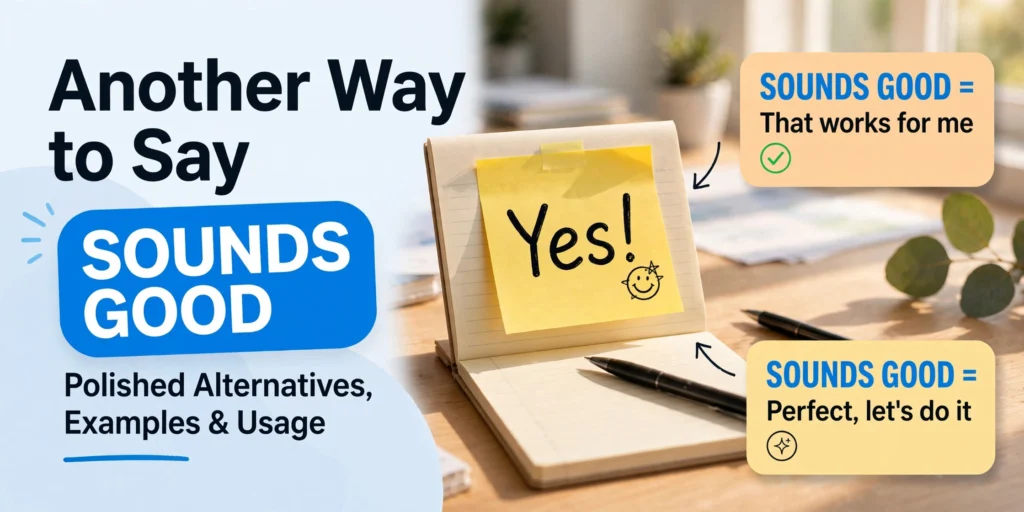
“Sounds good” is one of those phrases that does its job so well we barely notice how often we say it. It appears in text messages, email replies, Slack threads, and meetings — a quick, friendly way to agree with someone or accept a suggestion.
The trouble is that when you say it ten times a day, it starts to sound a little flat. In professional settings, “sounds good” can come across as a touch too casual, and repeating it in the same conversation makes you sound like you’re not really paying attention. The good news is that there are plenty of alternatives that carry the same warm, agreeable tone while sounding more polished or more natural for the situation.
Below, you’ll find over twenty alternatives to “sounds good”, grouped by tone and situation, so you can pick the right one whether you’re replying to your boss, a friend, or a client.
Quick Answer
The best alternatives to “sounds good” depend on context. In professional settings, use “That works for me,” “Agreed,” or “I’m happy with that.” In casual conversation, “Perfect,” “Sure thing,” or “Works for me” keep things friendly and natural. Each carries the same meaning — acceptance or agreement — with a slightly different tone.
Professional Alternatives to “Sounds Good”
In work emails and meetings, “sounds good” can feel a little informal. These alternatives convey agreement while sounding confident and professional.
- That works for me. — A classic, neutral choice. “Would Tuesday at 2 pm suit you?” → “That works for me. I’ll add it to my calendar.”
- I’m happy with that. — Shows you’ve considered the suggestion. “Here’s the revised draft of the proposal.” → “I’m happy with that. Let’s send it.”
- Agreed. — Short and decisive; ideal for email threads where brevity matters.
- I’m on board. — Great when a plan has been discussed and you’re confirming your support. “We’ll launch the campaign next Monday.” → “I’m on board.”
- That suits me fine. — Slightly more formal, with a British flavour. Perfect when replying to a meeting invitation.
- I have no objections. — Best used when a decision is being finalised and you want to signal quiet agreement.
- Let’s go with that. — Moves the conversation forward; shows decision-making energy.
Casual and Friendly Alternatives
With friends, family, or close colleagues, you can be more relaxed. These keep the same easy warmth as “sounds good” without the repetition.
- Perfect. — Enthusiastic and upbeat. “Want to meet at six?” → “Perfect.”
- Sure thing. — Friendly and informal; a natural reply to a request or suggestion.
- Works for me. — The casual twin of “that works for me”. “Shall we get pizza tonight?” → “Works for me.”
- Love it. — Adds real enthusiasm when you genuinely like the idea.
- You got it. — Good when someone asks you to do something and you want to sound happy to help.
- Fine by me. — Relaxed agreement, best for low-stakes decisions like choosing a film.
If you want more ways to agree casually, have a look at our list of ways to say yes — many of them work perfectly as alternatives to “sounds good” too.
Warm Alternatives That Show Enthusiasm
Sometimes plain agreement isn’t enough — you want to show you’re genuinely pleased. These options add a warmer, more engaged tone.
- That’s brilliant — let’s do it. — British, enthusiastic, and decisive.
- Couldn’t agree more. — Shows strong agreement, ideal when someone makes a point you fully support.
- Music to my ears. — A fun, idiomatic way to say you love what you’re hearing. “We’ve extended the deadline by a week.” → “Music to my ears.”
- That’s exactly what I was thinking. — Tells the other person you’re genuinely aligned, not just being polite.
- Count me in. — Perfect when agreeing to plans or an event: “We’re organising a team lunch on Friday.” → “Count me in.”
Formal Alternatives for Business Writing
In reports, proposals, and formal correspondence, “sounds good” should be avoided entirely. Use one of these instead.
- We are in agreement. — Formal and clear; suitable for contracts and official minutes.
- The proposed arrangement is acceptable. — Appropriate for negotiation contexts where precision matters.
- We accept the suggested terms. — Use when confirming agreement to specific conditions.
- This is satisfactory. — A reserved but professional way to confirm approval.
For more on varying your phrasing in professional writing, see our guide to another way to say “also”, which is handy when you’re building on someone else’s point in a longer message.
How to Choose the Right Alternative
Picking the right phrase comes down to three things: who you’re talking to, how formal the setting is, and how enthusiastic you actually feel. If you reply “fine by me” to your manager’s project proposal, you risk sounding indifferent; if you write “music to my ears” in a client email, you risk sounding unprofessional.
A simple rule: match the other person’s energy. If they write a short, practical message, reply in kind — “agreed” or “that works for me”. If they’re excited, let your reply show it — “love it” or “count me in”. And when in doubt in a professional context, the neutral options (“that works for me”, “I’m happy with that”) are always safe. Linking your phrasing to the flow of the conversation is also a good writing habit in general — much like varying how you connect ideas with alternatives to “on the other hand” keeps your writing fresh.
Common Mistakes
- Wrong: “Sounds good.” as the entire reply to a detailed proposal.
Right: “That works for me — the timeline and budget both look sensible.” (Show you actually read it.) - Wrong: “Sounds good!” to your boss five times in one thread.
Right: Vary your replies: “Agreed,” “That works for me,” “I’m happy with that.” - Wrong: “Sounds good, whatever.”
Right: “Sounds good — I’m happy to go with your suggestion.” (Avoid adding words that sound dismissive.) - Wrong: Using “sounds good” in a formal contract or legal context.
Right: “The proposed arrangement is acceptable.” or “We accept the suggested terms.” - Wrong: Replying “sounds good” when you actually disagree or have concerns.
Right: “Mostly good — one small concern about the timeline. Could we discuss?” (Don’t agree when you don’t mean it.)
Frequently Asked Questions
Is “sounds good” too informal for work emails?
It depends on your workplace culture. In relaxed teams it’s usually fine, but in formal industries or when writing to senior staff or clients, a more polished alternative like “that works for me” or “agreed” is a safer choice.
What is the most professional way to say “sounds good”?
“That works for me” and “I’m happy with that” are the most versatile professional options. They’re polite, neutral, and appropriate in almost any business context, from a quick email to a formal meeting.
Can I use “sounds good” in a job interview?
It’s better to avoid it. In an interview, you want to sound engaged and articulate. Replace it with phrases like “That makes sense,” “I agree,” or “That sounds like a great approach” when responding to the interviewer’s points.
What’s a warmer alternative to “sounds good” for friends?
“Perfect,” “love it,” and “music to my ears” all convey more warmth and enthusiasm than “sounds good.” They tell your friend you’re genuinely pleased, not just going along with the plan.
For more ways to freshen up overused phrases, explore our guides to words to use instead of said and other ways to say “in addition”.


Join the conversation