30 Ways to Say Bye (Casual, Formal, Funny & More)
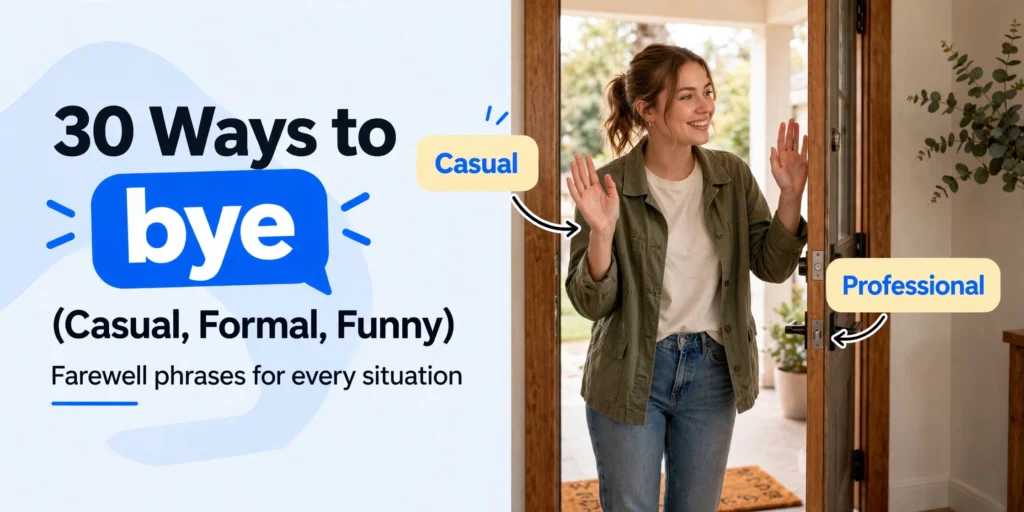
Saying goodbye sounds like the simplest thing in the world — until you realise you say it dozens of times a day, to very different people, in very different situations. A quick “bye” works when you are leaving the corner shop, but it can sound cold when you are ending a heartfelt phone call with a friend, and it would never do at the end of a job interview. The good news is that English is full of farewell options, and learning a few of them instantly makes your goodbyes warmer, funnier, or more professional.
Whether you want to keep things casual with friends, sound polished in the workplace, add humour to your partings, or just stop repeating the same single word, this guide has you covered. We will look at the most common ways to say bye in English, explain when each one fits, and flag the mistakes learners often make — so your next goodbye always lands just right.
Quick Answer
Casual ways to say bye include “laters”, “catch you later”, “see ya”, and “take it easy”. For professional settings, use “take care”, “have a good day”, or sign off emails with “best regards” or “kind regards”. Warm farewells include “stay in touch” and “look after yourself”, while funny options range from “don’t do anything I wouldn’t do” to a cheerful “toodle-oo”. Choose your goodbye based on the relationship and the setting.
Casual Ways to Say Bye
Casual farewells are the everyday goodbyes you use with friends, family, classmates, and people your own age. They are relaxed, friendly, and sometimes a little playful — perfect when there is no need to be formal.
- “See you later” and its shorter forms “see ya”, “laters”, and “later” — the most common informal goodbyes. “Laters!” is very common among younger speakers in Britain.
- “Catch you later” / “catch ya later” — friendly and upbeat; implies you will genuinely meet again.
- “Take it easy” — a warm, laid-back goodbye, similar to saying “relax and enjoy your day”.
- “Peace out” — playful and informal, more common with younger people; use it with friends, not your manager.
- “I’m off” / “I’m outta here” — announces you are leaving rather than saying goodbye directly; very common in spoken British English.
Example: “Right, I’m off — catch you later!” This kind of goodbye works brilliantly with people you know well.
Formal and Professional Ways to Say Bye
In the workplace, at interviews, or with people you do not know well, your goodbye should be polite and a little reserved. Overly casual slang can sound disrespectful in these settings.
- “Take care” — polite and warm without being too personal; safe for colleagues and clients.
- “Have a good day” / “have a lovely weekend” — courteous and widely used when parting in person or on the phone.
- “It was nice meeting you” — the standard farewell after a first meeting or interview.
- “I look forward to hearing from you” — a professional way to close a business conversation.
- “Best”, “kind regards”, and “best regards” — standard email sign-offs; “best” is slightly more casual, “kind regards” is the safe default in British business writing.
Example: “Thanks for your time today — it was nice meeting you. Take care!” In emails, never sign off with “bye” alone, as it can look abrupt. For even more polished alternatives, see our full list of ways to say goodbye for every situation.
Warm and Caring Ways to Say Bye
Sometimes a goodbye needs a little heart — when a friend is going through a hard time, when you are saying farewell to family, or when you will not see someone for a while. These options carry genuine warmth.
- “Stay in touch” — shows you want to keep the relationship going.
- “Look after yourself” — caring and sincere; very British in tone.
- “Take care of yourself” — similar, slightly more emphatic; good when someone is unwell or travelling.
- “Safe travels” / “have a safe trip” — ideal when someone is heading off on a journey.
- “I’ll miss you” — honest and emotional; reserve it for people you are genuinely close to.
Example: “Look after yourself, and stay in touch, yeah?” These phrases signal real affection, which is exactly what a flat “bye” often fails to do.
Funny and Playful Ways to Say Bye
With close friends, a goodbye can be a little joke in itself. Humorous farewells keep the mood light — just make sure the other person knows you are joking, and save these for people who share your sense of humour.
- “Toodle-oo” / “toodle-pip” — old-fashioned British silliness; charmingly cheeky when used deliberately.
- “Don’t do anything I wouldn’t do” — a classic playful warning that usually gets a laugh.
- “Smell you later” — a joke version of “see you later”; use it only with close friends.
- “Adios” / “ciao” — borrowed farewells used for fun in English conversation; “ciao” is very common in Britain.
- “May the force be with you” — perfect among fellow film fans, guaranteed to get a smile.
Example: “Right, I’m off — don’t do anything I wouldn’t do!” Humour is a brilliant way to end on a high note, but the same joke that works at the pub would be a disaster in a job interview, so read the room.
Ways to Say Bye in Text Messages
Texting has its own farewell culture: short, fast, and often abbreviated. These work in messages, chats, and social media — but they should stay out of formal emails and messages to your boss.
- “ttyl” (talk to you later) and “gtg” (got to go) — the classic texting goodbyes.
- “cya” — the written form of “see ya”.
- “nite” / “night” — a quick sign-off at the end of an evening conversation.
- “take care” — works in texts too, especially when you want to sound a little more thoughtful.
- “a waving-hand emoji” — sometimes the waving-hand emoji says it all on its own.
Example: “gtg, ttyl!” Texting goodbyes are meant to be brief — overthinking them defeats the purpose. Just match the tone of the conversation you are in.
Common Mistakes
- Wrong: “Bye bye!” to your manager at the end of a meeting. Right: “Take care” or “Have a good day” — “bye bye” sounds childish in professional settings.
- Wrong: Signing a formal email with “laterz”. Right: “Kind regards” or “Best” — slang sign-offs look careless in business writing.
- Wrong: “Goodbye” to a close friend you will see tomorrow. Right: “See you tomorrow” or “laters” — plain “goodbye” can sound oddly final, as if you will not meet again.
- Wrong: “Adieu” in everyday conversation. Right: “See you later” — “adieu” is dramatic and poetic in modern English, and sounds strange at the school gates.
- Wrong: “Peace out” in a farewell email to a client. Right: “Take care” — save playful slang for friends.
Frequently Asked Questions
What is the most common way to say bye in English?
“Bye” itself is by far the most common, followed closely by “see you later” and “take care”. In casual British speech, “laters”, “see ya”, and “cheers” are also extremely common. The best choice depends on how well you know the person and how formal the situation is.
Is it rude to just say “bye”?
Not usually — “bye” is neutral and acceptable almost everywhere. It can only sound a little abrupt if the situation calls for warmth, such as saying farewell to a close friend you will not see for a long time. In those cases, adding something like “take care” or “stay in touch” softens it.
What should I write instead of “bye” in a formal email?
Use “kind regards” as the safe default in British business emails. “Best regards” is slightly more formal, “best” is a touch more casual, and “many thanks” works when you are expressing gratitude. Avoid “bye”, “cheers”, or “laters” in formal correspondence.
How do you say bye in a funny way?
Classic funny goodbyes include “toodle-oo”, “don’t do anything I wouldn’t do”, “smell you later”, and a cheerful “adios”. These work wonderfully with friends who share your humour, but keep them away from the workplace — context is everything with comedy.
For more greeting ideas, explore our guides to ways to say hi and ways to say hello — and keep practising your farewells until they feel effortless.

Join the conversation